
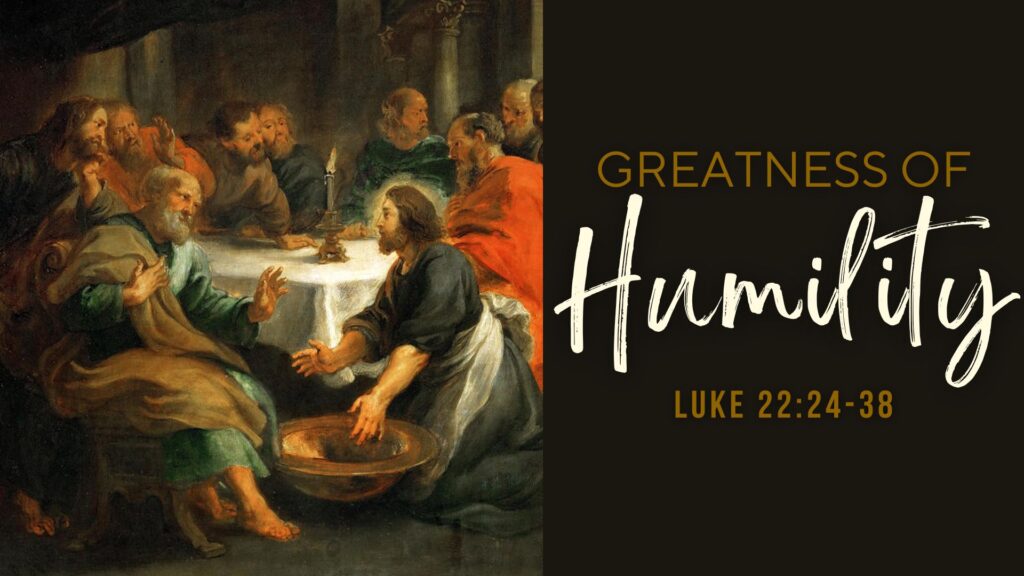
There is something almost shocking about Luke 22. Jesus has just shared the Passover meal with his disciples. He has spoken about betrayal. He has spoken about suffering. He has spoken with the weight of the cross already pressing in. And in that sacred, heavy, holy moment, the disciples start arguing about which one of them is the greatest.
That feels painfully human.
They move from asking who might betray him to disputing who among them has the most status, the most importance, the most authority. And Jesus answers by completely undoing the way human beings think about power. The rulers of this world like to stand above people. They like titles, recognition, visibility, and the feeling of being benefactors. But Jesus says that is not how it works in the kingdom of God. The greatest must become like the youngest, and the leader must become like the one who serves.
Then he points to himself.
He is their Lord. He is their teacher. He is the obvious leader in the room. And yet he is the one washing feet. He is the one serving at the table. He is the one lowering himself. That is what greatness looks like in the kingdom. Not grasping. Not climbing. Not posturing. Serving.
That is a hard tension for us because Scripture teaches both that we are deeply loved by God and that we are called to live low before him. We are sons and daughters of God, known and loved by the Creator of all things. And at the same time, we are called to pick up towels, set tables, wash feet, and make ready a banquet for others. That is not a contradiction. That is discipleship.
Jesus goes on to tell Peter and the rest that they are about to be sifted. The accuser wants to shake them, expose them, tear them apart through fear and accusation. And Jesus does not say, “I have prayed that you will never fail.” He says, in effect, “I have prayed that your faith will not fail.” That matters. Because all of them are about to stumble. All of them are about to scatter. But Jesus is already looking past the failure to the restoration. When you turn back, strengthen your brothers.
What a word for the church.
Humility does not mean pretending you are worthless. It means knowing exactly who you are before God and refusing to build your life on pride. Pride says, “I am the best.” But pride can also say, “I need to be greater than I am. I need to prove myself.” Both forms keep the self at the center. Humility says, “Not my will, but yours be done.” Humility trusts that God’s plan is better than our own self-made kingdoms.
And that is where the beauty of the kingdom begins to show. God’s people are to become so humble, so joined to his will, and so full of love for one another that even the least impressive person in the room could be used by God to lead them. That is not how the world works. But it is how the kingdom works.
There is nothing we can do to save ourselves. We are not capable of being kings over our own little worlds. But in faith, and by grace, we can serve one another. And that service, born out of humility, is where true greatness is found.